Tile Match Pro
- 4.3
- Rating
- 1.00M
- Installs
- Free
- Price

 Analysis by App-foxy
I downloaded Tile Match Pro expecting a familiar tile-matching pastime, and that is exactly where its appeal begins. It is a free puzzle game from Gimica GmbH, built around the simple pleasure of finding matching tiles and clearing them from the board. The short learning curve makes it easy to start, but the real question is more interesting: does it remain worth opening after the first few sessions, when the novelty of a new puzzle has worn off?
My answer is cautiously positive. This is a comfortable choice for short breaks, especially if you like visual sorting games that ask for attention without demanding a long uninterrupted session. It is less convincing for anyone looking for deep strategy, a strong story, or a constantly changing challenge. The game earns its place through accessibility and routine rather than through a dramatic sense of progression.
From an easy first session to a repeatable habit
I’d approach Tile Match Pro as a small, deliberate pause rather than a game that needs to take over a whole evening. In this section, I look at how its simple entry point can turn into a repeatable routine, and what I’d pay attention to before making that routine automatic. The distinction matters: an easy game is convenient, but a good habit still needs to feel worthwhile.
You May Also Like

 Blood Strike: 2.5 Anniversary
Blood Strike’s Loadouts Turn Every Drop Into a Tactical Gamble
A close look at Blood Strike’s custom loadouts: how fast access to signature weapons reshapes its battle royale rhythm, rewards preparation, and narrows the gap between fights.

 Pandora - Music & Podcasts
Pandora’s Music Is Easy to Start, but Harder to Recover
Pandora’s strength is its low-effort path from a seed to a station. Its weak spot is how much confidence it asks you to place in connection, setup, and quiet recovery.

 8 Ball Pool
 Is Built on Rivalries, Rematches, and Routine
A close look at the rivalries, rematches, shared routines, and unanswered safety questions that turn a quick pool match into a persistent mobile community.

 Samsung Music
’s Quiet Strength Is Playing What You Already Own
Its reach comes less from spectacle than from dependable access to a personal library. That simplicity is both the app’s strongest retention engine and its ceiling.

 AccuWeather: Weather Radar
AccuWeather Review: A Quick, Clear Forecast for Everyday Decisions
For everyday plans, the best forecast is the one you can understand quickly. AccuWeather makes rain timing, radar, and local conditions easy to act on, with a few trade-offs.

 Hill Climb Racing
Why Hill Climb Racing Still Turns Crashes Into One More Run
A tiny car, a bumpy hill and one more upgrade: Hill Climb Racing keeps resurfacing because its simple chaos makes every near-miss feel personal.
More From Our News Desk



Why the opening hours work so well
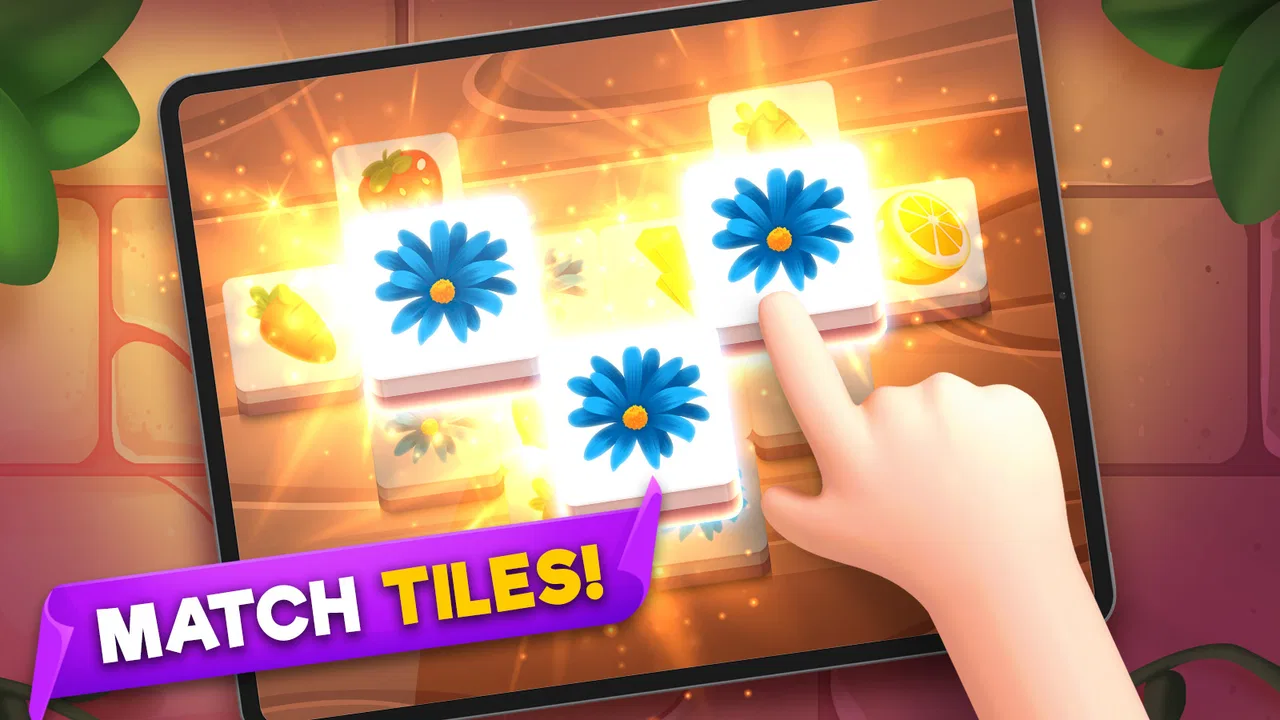
The first thing I noticed was how quickly the basic idea becomes readable. You do not need a tutorial-heavy introduction or previous experience with puzzle games. The board presents a visual problem, and your task is to recognize matching tiles, choose carefully, and gradually reduce the clutter. That directness is valuable when I only have a few minutes and do not want to learn a complicated control scheme.
The strongest early use case is the in-between moment: waiting for an appointment, taking a short break from work, or winding down before bed. A round can feel purposeful without requiring the commitment of a full-length game. I can play with one hand in a relaxed setting, pause mentally between moves, and return to the board without needing to remember a plot or a large set of rules.
That simplicity also makes it suitable for a broad audience. The game carries an Everyone content rating, so it is an approachable option for households where different ages want something calm to try. I would still treat it as a personal recommendation rather than assuming every player will enjoy it. People who dislike repeated visual patterns may find the central loop too narrow, while fans of match-three games may miss the more explosive effects and chain reactions those games often provide.
Tile Match Pro has attracted more than a million installs and holds a 4.2 average from around 8.6 thousand ratings. Those figures suggest that the format has found a substantial audience, but they do not replace personal fit. In my experience, the game is at its best when I want a small concentration exercise, not when I want a major entertainment event.
The small decisions matter more than the matching itself
A useful habit is to avoid clearing the first obvious pair automatically. I get better results when I scan the whole board first and look for tiles that are blocking several possible matches. Removing a visible pair can sometimes make the remaining layout less flexible, while a less obvious choice may open more useful space. The game’s basic rule is simple, but this kind of ordering gives the early sessions a modest layer of planning.
I also found it helpful to divide the board mentally into sections instead of checking every tile at random. I look for a pair in one area, then compare it with the nearby tiles before moving elsewhere. This reduces the feeling of visual noise and makes mistakes easier to spot. It is a small technique, but it changes the game from passive tapping into a more deliberate routine.
Another practical tip is to stop a session when attention starts to slip. Tile matching can look effortless, yet tired play leads to careless selections and makes the board feel more frustrating than it really is. I prefer several brief sessions over one long stretch. That approach also protects the game’s main strength: it fits naturally into spare time instead of competing with the rest of my day.
What changes after the initial novelty
During the first week, the satisfaction comes from learning the visual rhythm. I become faster at recognizing patterns, more comfortable with the board, and more aware of the consequences of each choice. Even without a complicated rule set, that adjustment gives the opening sessions a sense of improvement.
After that, the experience depends heavily on how much variety the individual player needs. Tile Match Pro does not win me over with a story, character development, or a large strategic system. Its attraction is the repeatability of the puzzle loop. If I enjoy sorting, scanning, and making careful selections, that can be enough. If I need a constant stream of new mechanics, the game may feel familiar sooner than I would like.
This is where the store summary, “Match Like A Pro,” makes sense as a description of the attitude rather than a promise of complexity. The game encourages accuracy and awareness, but I would not mistake it for a demanding strategy title. It is closer to a focused mental snack: pleasant, convenient, and strongest in small portions.
Whether it keeps earning space on my phone
When deciding whether it keeps a place on my phone, I weigh the pleasure of a familiar puzzle against the chance that repetition will dull it. I also consider whether the free experience is enough for my needs before treating any purchase as worthwhile. That leads to a practical verdict: keep it for the moments it genuinely improves, and let it go if opening it becomes mere reflex.
Month-to-month value comes from routine
For me, the long-term value is tied to habit. I can imagine opening it during a daily commute, after finishing a task, or whenever I want something interactive that does not require sound or a large time investment. That makes it more durable than a game I enjoy once and then abandon because every session demands too much preparation.
The recurring appeal is not that every visit feels completely new. Instead, it offers a familiar activity that can match my energy level. On a busy day, I can make a few careful moves. On a quieter day, I can stay longer. That flexibility matters more to me than a dramatic reward system, particularly when I am using a phone for short, fragmented periods.
Still, a repeatable loop needs a personal reason to continue. I would keep it installed if I liked measuring my own concentration, improving my decision order, or using it as a quiet transition between activities. I would probably remove it if I found myself opening it automatically without enjoying the puzzle. That distinction is important: convenience can keep an app visible, but only genuine satisfaction gives it lasting value.
The game is free to download, with in-app purchases ranging from ninety-nine cents to twelve dollars and ninety-nine cents per item. I would begin without spending anything and decide later whether the paid options solve a problem I actually have. For a casual puzzle, the sensible approach is to avoid treating optional purchases as part of the basic requirement. If the free experience already serves your short-break needs, paying is not necessary to justify keeping it.
Who will probably keep playing
I would recommend it to players who enjoy tile matching, visual organization, and low-pressure puzzle sessions. It is also a reasonable choice for someone returning to mobile games after a long break, because the central interaction is easy to understand. The minimum operating system is Android 7.0, which makes the stated compatibility broad enough for many older Android devices.
It may also suit people who want a game that can sit alongside a podcast or a quiet routine. Because the puzzle itself is the focus, it does not demand the same emotional attention as a narrative adventure. That makes it useful for a short reset between more demanding tasks, provided the player enjoys the repeated act of scanning and matching.
I would skip it if you want competitive multiplayer, a rich campaign, elaborate character systems, or a puzzle game that constantly changes its rules. I would also look elsewhere if you become bored by repeating a single core action. A more varied logic game would be a better match for someone who wants number puzzles, word challenges, spatial manipulation, or progressively different problem types rather than tile recognition.
The maintenance burden is low, but not invisible
One advantage is that the game does not ask me to maintain a complicated collection of characters, equipment, or long-term resources. I can return after several days away and understand what I am doing immediately. That low memory burden is a real benefit for a casual game, because I do not feel punished for missing a week.
The trade-off is that the game itself may need to carry the motivation. In a deeper puzzle title, I might return to solve a particular challenge or explore a new system. Here, the reason to return is mainly the pleasure of another matching session. That is perfectly valid, but it means the game has less protection against routine fatigue.
My practical maintenance advice is simple: keep sessions short, do not force progress when the board stops feeling enjoyable, and avoid spending money merely to extend a habit you are already questioning. If the game remains a pleasant break, it is doing its job. If it becomes background tapping, taking a few days away will quickly show whether there is meaningful interest underneath the routine.
Where fatigue can begin
The most obvious source of fatigue is repetition. Matching tiles is satisfying because it is understandable, but that same clarity can become predictability. Once I have settled into the visual process, I may want a stronger sense of surprise or a new type of decision. The game’s calm structure is an advantage for some players and a limitation for others.
Another possible friction point is the balance between careful planning and speed. Moving quickly can feel efficient, but rushing makes the board harder to read. Playing slowly improves control, yet it can make a session feel more like a task. The best experience sits between those extremes, and finding that pace is part of deciding whether the game suits you.
Monetization can also affect the long-term impression of a free puzzle game. I judge it less by the existence of purchases than by whether I feel pressured to consider them. Since individual items can cost from ninety-nine cents up to twelve dollars and ninety-nine cents, I would pay attention to my own spending pattern rather than assuming every option has equal value. For me, a purchase would need to provide a clear improvement to my personal experience, not simply interrupt a moment of impatience.
There is also a difference between relaxation and stimulation. Tile Match Pro can help me focus, but it is not necessarily energizing. After a long day, that may be exactly what I want. During a period when I need novelty, competition, or a stronger challenge, the same quiet design may feel underpowered. Choosing it depends on the mood I want the game to support.
How it compares with familiar puzzle alternatives
Compared with match-three games, this title feels more deliberate and less dependent on cascading effects. I am looking for relationships among visible tiles rather than waiting for a chain reaction to create the excitement. Players who prefer colorful bursts and fast combos may find traditional match-three games more rewarding, while players who enjoy orderly visual decisions may prefer this format.
Compared with word games, the barrier to entry is lower because vocabulary is not part of the challenge. That makes it easier to play when I am tired or when language-based puzzles feel demanding. The compromise is that it offers less variety in the kind of thinking required. A word game can test recall, spelling, and language flexibility; this one stays focused on visual recognition and choice.
Compared with complex logic games, Tile Match Pro is friendlier but shallower. I do not need to learn a large system before enjoying it, yet I also should not expect the same depth as a title built around deduction, numbers, or spatial transformation. I see it as a companion to those games rather than a replacement. Its role is the quick, accessible session between more demanding challenges.
Details worth knowing before installing
The game was released on October 2, 2023, and its current version is 1.17.1. I mention this because version information matters when deciding whether a casual title is likely to fit an existing device and routine. The developer is Gimica GmbH, and the game’s straightforward presentation makes its purpose clear from the beginning: open it, read the board, and start matching.
If you are wondering whether it is suitable for a child, the Everyone rating gives a useful starting point, but I would still make the decision based on the child’s tolerance for repetition and any household rules around purchases. The age label describes broad content suitability; it does not guarantee that the game will hold every player’s attention.
If you are wondering whether it works as a serious brain-training tool, I would keep expectations modest. It encourages observation, patience, and planning order, which I find mentally engaging. However, I would not install it expecting a structured educational program or a carefully measured training course. Its value is recreational concentration, and that is enough when judged on its own terms.
My long-term verdict
After the first-week appeal fades, Tile Match Pro remains worthwhile for a specific kind of player: someone who genuinely enjoys visual matching and wants a free puzzle that can be picked up without preparation. Its lasting strength is convenience. I can return after a gap, remember the rules immediately, and fit a session around everyday life.
Its weakness is equally clear. The same focused loop that makes it accessible can make it feel repetitive over time. I would not call it a must-have for every Android user, and I would not recommend it to someone searching for deep strategy or constant novelty. A more varied puzzle collection would offer better long-term value for that audience.
For my own phone, I would keep it as an occasional break rather than make it a central game. That is still a positive result. Not every app needs to dominate my free time; some earn their place by being dependable when I want a quiet, uncomplicated challenge. If you enjoy short tile-matching sessions and can resist turning optional purchases into a habit, this game has enough everyday value to stay installed after the novelty wears off.
FAQs for Tile Match Pro
01What is Tile Match Pro and how does it work?
Tile Match Pro is a puzzle game designed to challenge your matching skills. Players must strategically match tiles with similar patterns or colors to clear levels. Each level offers unique layouts and increasing difficulty, providing endless entertainment and mental exercise.
02Is Tile Match Pro free to play, and are there in-app purchases?
Tile Match Pro is free to download and play, offering a variety of levels without cost. However, it includes optional in-app purchases for items like extra lives or boosters, which can enhance the gaming experience or help overcome challenging levels more easily.
03Does Tile Match Pro require an internet connection to play?
Tile Match Pro can be played offline, making it a perfect option for on-the-go gaming without relying on an internet connection. However, some features, like leaderboards or daily challenges, may require internet access to function properly.
04What are the system requirements for installing Tile Match Pro?
Tile Match Pro is compatible with most modern Android and iOS devices. For Android, a minimum of version 5.0 is recommended, while iOS devices should have at least iOS 10.0. Ensure your device has sufficient storage space for a smooth installation and gameplay experience.
05How can I troubleshoot common issues with Tile Match Pro?
If you encounter issues with Tile Match Pro, try restarting the app or your device. Ensure your app is updated to the latest version. Checking for device operating system updates can also help. If problems persist, contact the app’s support team for further assistance.
Pros
- Intuitive design enhances user experience.
- Variety of levels keeps gameplay engaging.
- Smooth animations improve visual appeal.
- Offline mode available for uninterrupted play.
- Periodic updates add fresh content.
Cons
- Occasional ads can disrupt gameplay.
- In-app purchases may be pricey.
- Some levels feel repetitive.
- Limited customization options.
- Battery consumption can be high.

Tile Match Pro
Gallery